
Lost Masterpieces, Hidden Fortunes and the Blockchain: A New Chapter for Art Provenance
Here are three stories of Fine Art Collections that are shrouded in mystery and fraud that blockchain could have stopped.
First, the Modigliani that Vanished into Offshore Secrecy
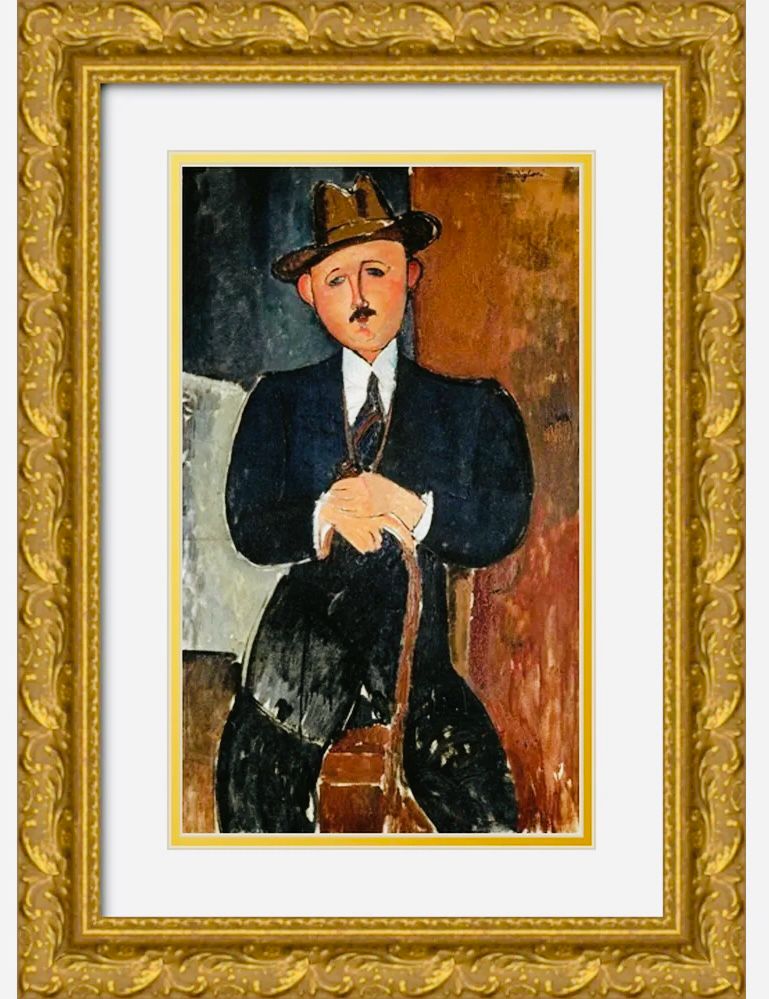
In 1939, as war loomed over Europe, Jewish art dealer Oscar Stettiner fled Paris, leaving behind his collection of treasured artworks. Among them was “Seated Man with a Cane”, a portrait by Amedeo Modigliani, an artist whose work would later command astronomical prices at auctions. The Nazis seized Stettiner’s collection and like so many looted artworks, the painting disappeared into the fog of war.
For decades, no one knew where it had gone. Then, in 1996, International Art Center (IAC) – a company registered in Panama – purchased the painting at Christie’s in London for $3.2 million. Its journey had been obscured by secretive transactions, offshore accounts and a network of corporate structures designed to shield ownership.
By 2011, Stettiner’s grandson, Philippe Maestracci, discovered the painting’s whereabouts and sued for its return. He had evidence connecting the Modigliani to the Nahmad family, one of the most influential art-dealing dynasties in the world. The Nahmads denied ownership, insisting that IAC, and not their family, held the painting. But leaked documents from the Panama Papers later confirmed what was long suspected – the Nahmads controlled IAC and had been using offshore structures to shield ownership of valuable artworks for years.
The case dragged on, caught in a legal limbo where the grandson had to prove not only that the painting had been stolen, but also who actually owned it now. The Nahmads’ defense rested not on disproving the painting’s looted past, but on challenging the ability of its rightful heirs to trace its chain of ownership through the secrecy of offshore finance.
Even today, “Seated Man with a Cane” sits locked away in a Geneva freeport, far from the eyes of the public and out of reach of its rightful owner. The fight for its return continues.
How Blockchain Would Have Changed This Story
The fate of Stettiner’s Modigliani would have been different if blockchain had been around to record and track ownership history.
Every sale of Art, every Art transfer, every new Art owner, would have been permanently recorded on an immutable blockchain ledger, visible for all to see. Instead of ownership being hidden behind offshore companies and legal loopholes, the painting’s provenance would have been indisputable.
If SUPERLUXE’s blockchain-backed provenance approach to Fine Art had been in place decades ago, Stettiner’s grandson would not have needed years of legal battles to prove what should have been clear from the start. The painting would have remained traceable, and its chain of ownership would have been permanently etched into history.
No offshore trusts. No hidden corporate entities. No ability to deny ownership.
With Tamper-proof DNA Tags, linked to a blockchain-based Provenance Certificate, looted artwork like this Modigliani could never be laundered through auctions, hidden in freeports, or sold with forged documentation. Blockchain could have closed the loopholes that allowed it to vanish in the first place.
Second, the Disappearing Masterpieces of a Greek Shipping Dynasty
FineArt is not just stolen in times of war. Sometimes, it vanishes quietly, slipping through the cracks before anyone notices it is gone.
For decades, Basil Goulandris, a Greek shipping magnate, assembled one of the world’s most valuable private art collections and the founder of Greece’s first Museum of Modern Art. Paintings by Van Gogh, Picasso, Chagall and Matisse lined the walls of his home. When he died in 1994, it was assumed that his vast collection would be inherited by his widow, Elise. But when Elise passed away in 2000, the family discovered something shocking – the entire collection had already been sold years earlier, without anyone knowing.
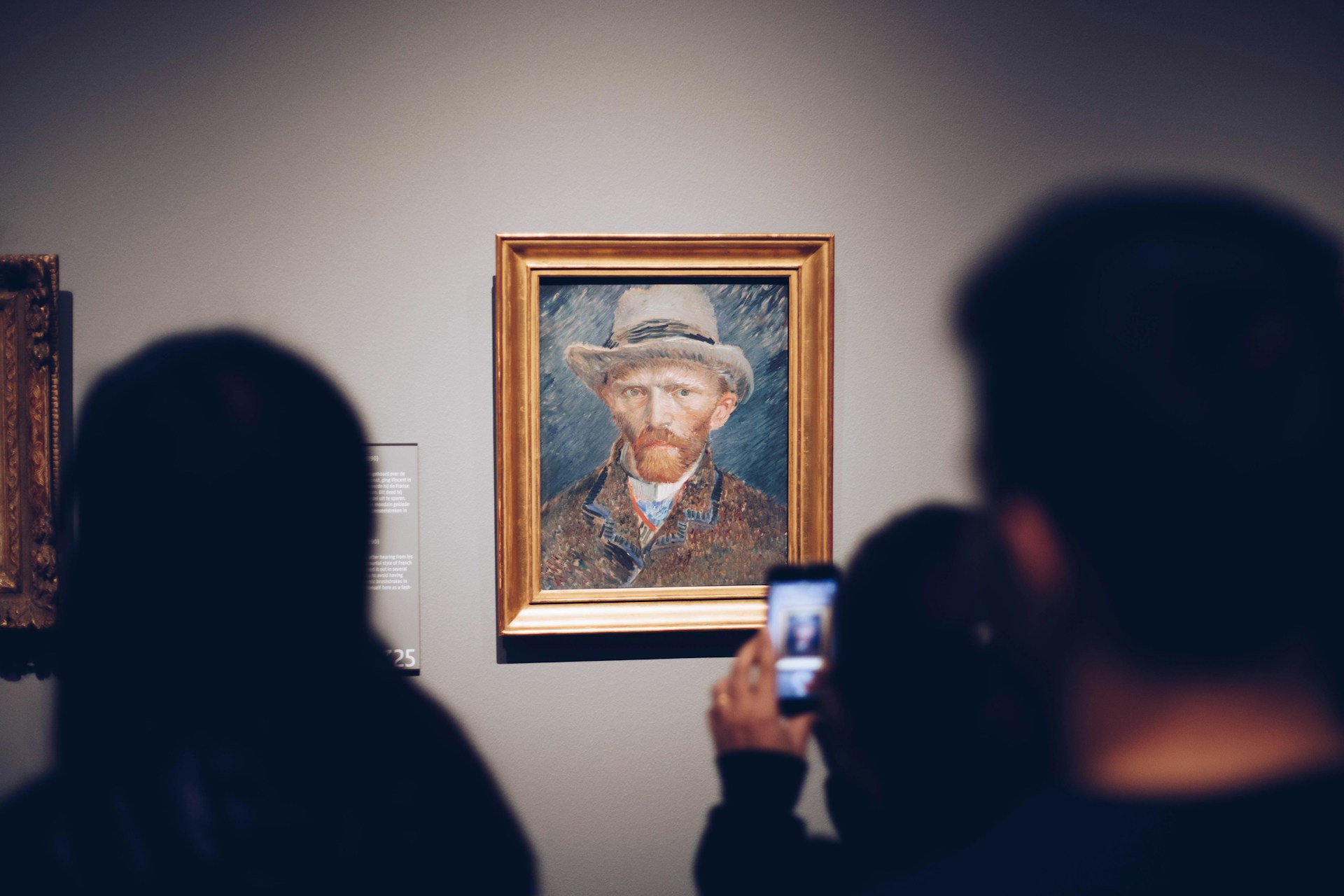
The 83 missing masterpieces, worth an estimated $3 billion, had been transferred to a Panamanian shell company called Wilton Trading S.A. decades before Elise’s death. The company’s records showed that Basil had sold his entire collection in 1985 for the suspiciously low price of $31.7 million less than a fraction of its true value.
But something did not add up. The paintings never left the family’s possession. For years, Basil and Elise continued to loan their “sold” paintings to museums and dealers, falsely listing themselves as the owners in provenance records.
A Swiss prosecutor later revealed that the sales agreement was forged. The contract was signed on paper that did not exist in 1985, and no evidence of payment was ever found. Despite this, the paintings were quietly sold through a network of newly formed offshore companies, with their ownership history scrubbed and concealed.
By 2005, many of these paintings were auctioned at Sotheby’s, their previous owners hidden behind layers of corporate secrecy. A Van Gogh still life, once belonging to Basil, was sold to a Californian Billionaire through yet another offshore entity.
To this day, legal battles rage over who really owns these paintings. Their provenance is a mess of conflicting documents, secret agreements and deliberately erased histories. Some pieces remain locked in legal disputes, while others have simply disappeared into private collections, with no way to trace their movements.
How Blockchain Would Have Exposed the Truth
Again, if SUPERLUXE’s blockchain-backed provenance approach to Fine Art had been in place, none of this would have been possible.
When Basil Goulandris “sold” his collection, the true ownership would have been recorded permanently on the blockchain. Instead of relying on paper documents that could be forged, altered or erased, the paintings’ provenance would have been verifiable through an immutable digital ledger.
- No secret offshore transfers
- No forged documentation
- No ability to hide a masterpiece’s true history
Every painting in the Goulandris collection would have had a Tamper-proof DNA Tag on it, linked to a Blockchain Provenance Certificate, making it impossible for these works to change hands without a transparent, traceable record.
The Swiss prosecutor’s job would not have required forensic document analysis to prove a fake sale. The entire transfer would have been invalidated before it could even happen.
For the first time, blockchain backed provenance ensures that art cannot be erased from history.

And third, the Auction House Shell Game: How Masterpieces Disappear
One of the most infamous art auctions in modern history took place at Christie’s in 1997. The collection of Victor and Sally Ganz, a legendary couple who spent decades acquiring Picassos, Stellas and Johns, was put up for sale. In one evening, it shattered records, selling for $206.5 million.
But hidden behind the bidding wars was a different story. The Ganz heirs had already sold the collection months before the auction, not to an individual, but to a South Pacific offshore company called Simsbury International Corp.
Simsbury International was a shell company created solely for the Ganz transaction, registered in Niue, a tiny Pacific island nation. Its owners? Unknown. Its Directors? Nominee stand-ins from Mossack Fonseca, the law firm at the center of the Panama Papers leak.
The auction catalogue never mentioned that Christie’s had a direct financial stake in the paintings. But leaked documents later revealed that the auction house had a side-deal – the original buyers of Simsbury International would split the profits if the paintings sold for more than expected.
The true owners of these works remain unknown to this day.
How Blockchain Stops the Shell Game
Onceagain, if SUPERLUXE’s blockchain-backed provenance approach to Fine Art had been in place, none of this would have been possible.
Each painting in the Ganz sale would have been Tagged with a Tamper-proof DNA Tag and linked to a Blockchain Provenance Certificate marrying up to a ledger entry on the blockchain. This would then prevent it from being transferred to an offshore shell company without a trace. The true owners would have been publicly recorded, ensuring transparency in high-value transactions.
Instead of a hidden financial agreement manipulating prices, the blockchain solution would have exposed the true connections between buyers, sellers and auction houses.
A Future Without Lost Art
The world of Fine Art thrives on secrecy. But, SUPERLUXE & Partners, integrating the blockchain in to every artwork we sell, is pulling back the curtain.
The SUPERLUXE approach ensures that every sale, every transfer and every owner is permanently recorded on the blockchain, making fraud, theft and hidden ownership impossible.